

There have been many fascinating finales in the history of the Indian Premier League, but the victory in some editions has seen captains taking risky steps in order to win rather than simply putting up huge runs. The most successful captaincy masterstrokes in IPL finals have been instances where captains outthought their opponents quickly and took crucial decisions that proved pivotal to securing the win.
From the legendary field set by MS Dhoni for trapping Kieron Pollard to Hardik Pandya's all-round efforts that helped Gujarat Titans lift the trophy, such decisions transformed a match within seconds. In each case, the move carried the potential of failure, was executed in the context of an important final, and significantly influenced the eventual winner of the IPL.
Captaincy in an IPL final will require making the right calls in small things. Throughout IPL finals in different seasons, there have been several captains who have made brilliant tactical decisions that could define the result of a crucial game. Here are some of the most influential captaincy masterstrokes ever made in IPL finals history.
Five greatest captaincy masterstrokes in IPL finals
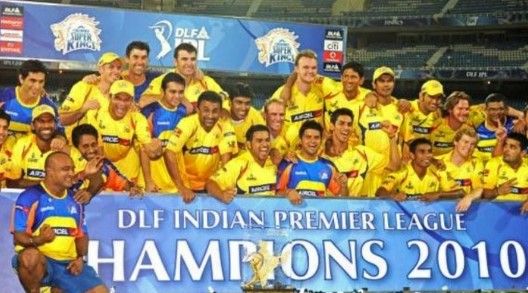
1. MS Dhoni’s Trap To Pollard (CSK vs MI, 2010 Final)
One of the finest tactics that have been played in IPL took place when MS Dhoni guided his team, Chennai Super Kings, to their first ever IPL victory. It must be noted here that Chennai Super Kings scored 168/5 and reduced Mumbai Indians to 114/6. Nevertheless, Kieron Pollard came up with fireworks and scored 27 runs in 10 balls, thus reducing the target to 27 off 7 balls.
It was then realized by Dhoni that Pollard was inclined to play straight shots. Hence, he put Matthew Hayden at mid-off, which was quite near to the stumps, along with keeping one long-off player. As anticipated, when Morkel delivered full-length balls, Pollard went straight for a shot and got caught by Hayden. Pollard’s dismissal ended Mumbai’s challenge as CSK won by 22 runs.
2. Rohit Sharma’s Death-Over Gamble (MI vs RPS, 2017 Final)
Mumbai Indians defended only 129/8 in one of the closest IPL finals ever. Rising Pune Supergiant required 11 runs from the last over with seven wickets remaining and looked firmly in control.
After Manoj Tiwary’s boundary reduced the equation to seven off five balls, Rohit Sharma intervened with a tactical adjustment. He asked Mitchell Johnson to reduce pace and repositioned Ambati Rayudu at sweeper cover. The move targeted Steve Smith’s preferred scoring area. Johnson delivered a wider slower ball, Smith miscued, and Rayudu took the catch. Pune eventually finished at 128/6, handing Mumbai a dramatic one-run victory.
3. Shane Warne’s Leadership (RR vs CSK, 2008 Final)
The first final of the IPL was played between Rajasthan Royals who were not favorites to win, and Chennai Super Kings that had some of the best players on their roster. The impact of Shane Warne went beyond strategy because he instilled confidence within a team composed of players who did not have much recognition.
Rajasthan Royals’ strategy for batting ensured that CSK scored only 163/5. In the chase, Warne maintained his cool until the very end. As the winning wickets approached, he tactfully rotated strike with Sohail Tanvir. Rajasthan scored 164/7 off the last ball to win the match by three wickets.
4. KKR’s Sunil Narine Impact (KKR vs PBKS, 2014 Final)
Gautam Gambhir played a tactical stroke right from the start of the 2014 final versus Kings XI Punjab. Right after Virender Sehwag was dismissed and Punjab were 23-1, Gautam Gambhir brought on Sunil Narine, along with positioning a fielder in short leg position.
This strategy caused some confusion for the batsman, George Bailey. Bailey, being deceived by the spin, walked back towards the leg side to hit a spinning delivery that turned out to be a straight one, dismissing him for 1. The team fell down to 30-2 and achieved the lowest possible Powerplay score of 32-2. However, despite this setback, Wriddhiman Saha scored an unbeaten century of 115, enabling KKR to chase 200 to secure the title by three wickets.
5. Hardik Pandya Leads from Front (GT vs RR, 2022 Final)
For the very first season for his team, Gujarat Titans, Hardik Pandya opted to go for direct action instead of just depending upon the specialists. Rajasthan Royals had a score of 58/1 when Pandya himself came into play with middle overs.
By dismissing Jos Buttler, Sanju Samson, and Shimron Hetmyer, Pandya decimated the batting lineup of Rajasthan Royals. With 17/3 from his end, he restricted Rajasthan Royals to 130/9. Then Pandya scored 34 runs in a crucial stand of 61 runs with Shubman Gill, following which Gujarat was at 23/2. Finally, the Gujarat Titans made it 133/3 in 11 balls with seven wickets in hand.