

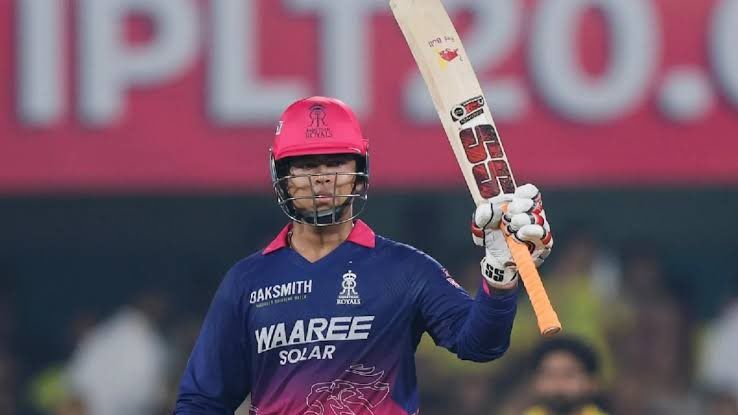
The Indian Institute of Management (IIM) Indore has announced a groundbreaking, multidisciplinary research study focusing on 15-year-old cricket sensation Vaibhav Sooryavanshi. The study aims to decode the "Vaibhav Model" to understand the formula behind extraordinary success at a very young age. This research follows Sooryavanshi's historic, record-breaking performance for the Rajasthan Royals in the recently concluded IPL 2026 season. He won five major awards, including the Orange Cap and the Most Valuable Player (MVP) title, while amassing 776 runs and smashing a historic 72 sixes. IIM Indore fast-tracked this study specifically due to the unprecedented nature of Sooryavanshi's Indian Premier League campaign with the Rajasthan Royals. He accomplished what no other player in league history has managed at his age.
Led by Director Himanshu Rai, the IIM Indore research team will analyze the teenage phenom through distinct academic prisms. Researchers specializing in sports management and behavioral sciences want to map his physical and cognitive response patterns. Specifically, they are studying his split-second reaction time from the moment a ball is released by a bowler to how his muscle memory triggers elite power-hitting responses. A core component of the three-month research is identifying how underage prodigies survive immediate fame. The study will track the psychological hazards of navigating sudden massive wealth, intense media scrutiny, and extreme social media polarization while trying to remain grounded. The study recognizes that talent does not grow in a vacuum. Academic investigators will interview his family, early coaches from Bihar, and Rajasthan Royals team management. The goal is to isolate how family sacrifice, emotional stabilization, structured mentoring, and corporate sports backing successfully converge.
Vaibhav Sooryavanshi is no longer just breaking records. After a historic IPL 2026 season, IIM Indore is set to conduct a case study on his journey and success. 776 runs. 72 sixes. Orange Cap. Emerging Player of the Season. From dominating bowlers to becoming a subject of… pic.twitter.com/Lyc2zGpZkJ
— Vikram Sharma (@vikram_sharma11) June 2, 2026
What led to introduction of this ‘Vaibhav Model’?
The introduction of the ‘Vaibhav Model’ by IIM Indore was triggered by a specific mix of unprecedented athletic achievements and a critical corporate-academic necessity. The immediate trigger was the sheer historical scale of 15-year-old Vaibhav Sooryavanshi's campaign with the Rajasthan Royals in the IPL 2026 season. He shattered West Indian legend Chris Gayle's 14-year-old record by hitting a monumental 72 sixes in a single season. He swept five individual awards, including the Orange Cap and Most Valuable Player (MVP). According to IIM Indore Director Himanshu Rai, the numbers alone did not dictate the model, but rather the realisation that a child could out-perform elite global stars like Jasprit Bumrah and Pat Cummins with total fearlessness.
A primary reason for establishing the model is the historical data showing that many child prodigies across the globe drop off or damage their careers after achieving sudden, massive success at a young age. Sudden multi-crore contracts, intensive media tracking, and social media polarization frequently trigger extreme mental burnout. The model was created to design a formal corporate strategy on how management firms, brands, and sports bodies can shield young prodigies from this destructive cycle. Historically, early talent development in India has relied on informal, unstructured family efforts. Vaibhav's own father had to sell land, and his mother traveled 2.5 hours every day to Patna to secure basic cricket practice for him. The "Vaibhav Model" was therefore introduced to synthesize these erratic, real-world elements into a structured, replicable system. It provides a blueprint that the BCCI can use for young athletes, and corporate leaders can implement to manage high-potential talent in tech, mathematics, and science.