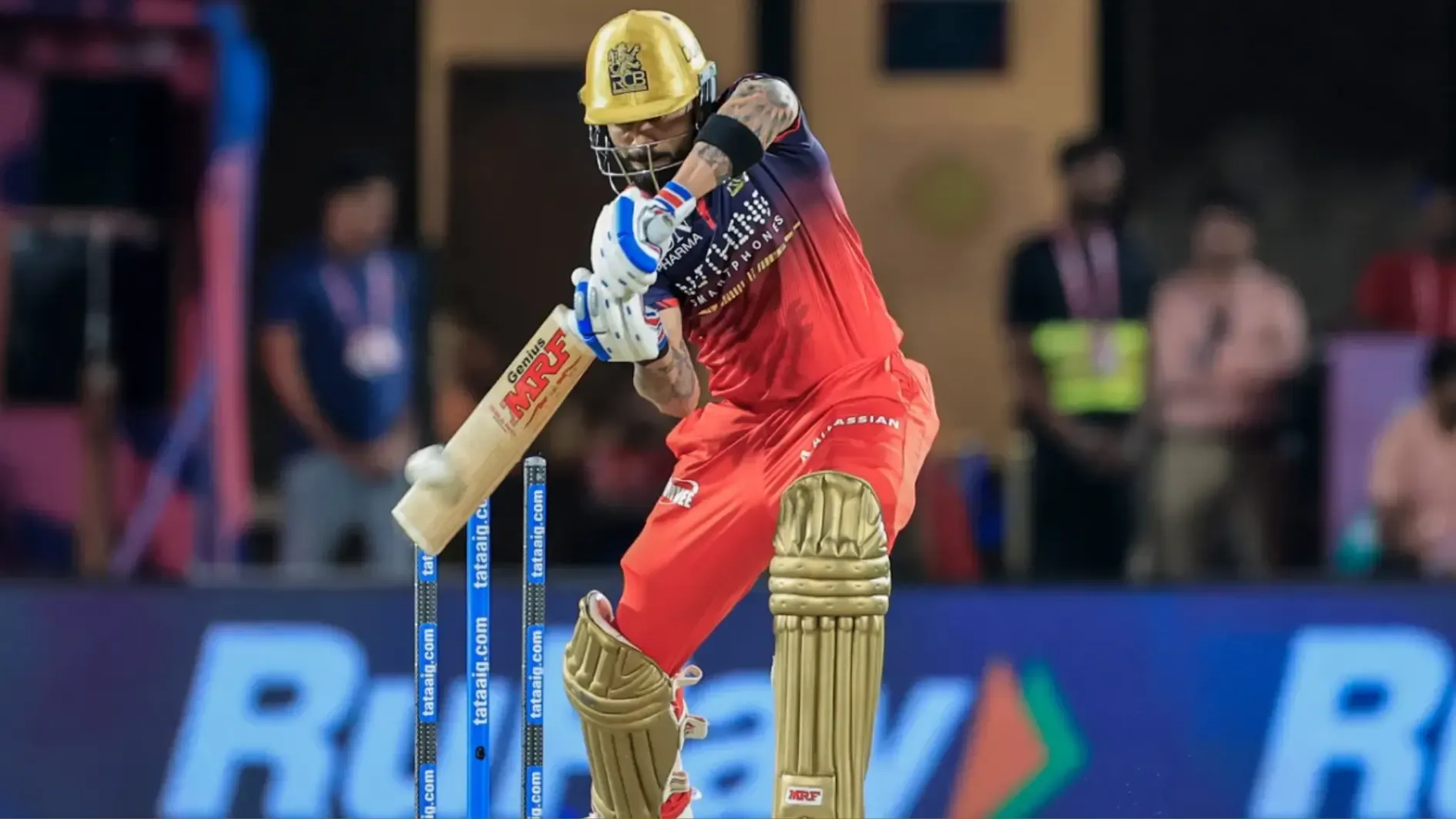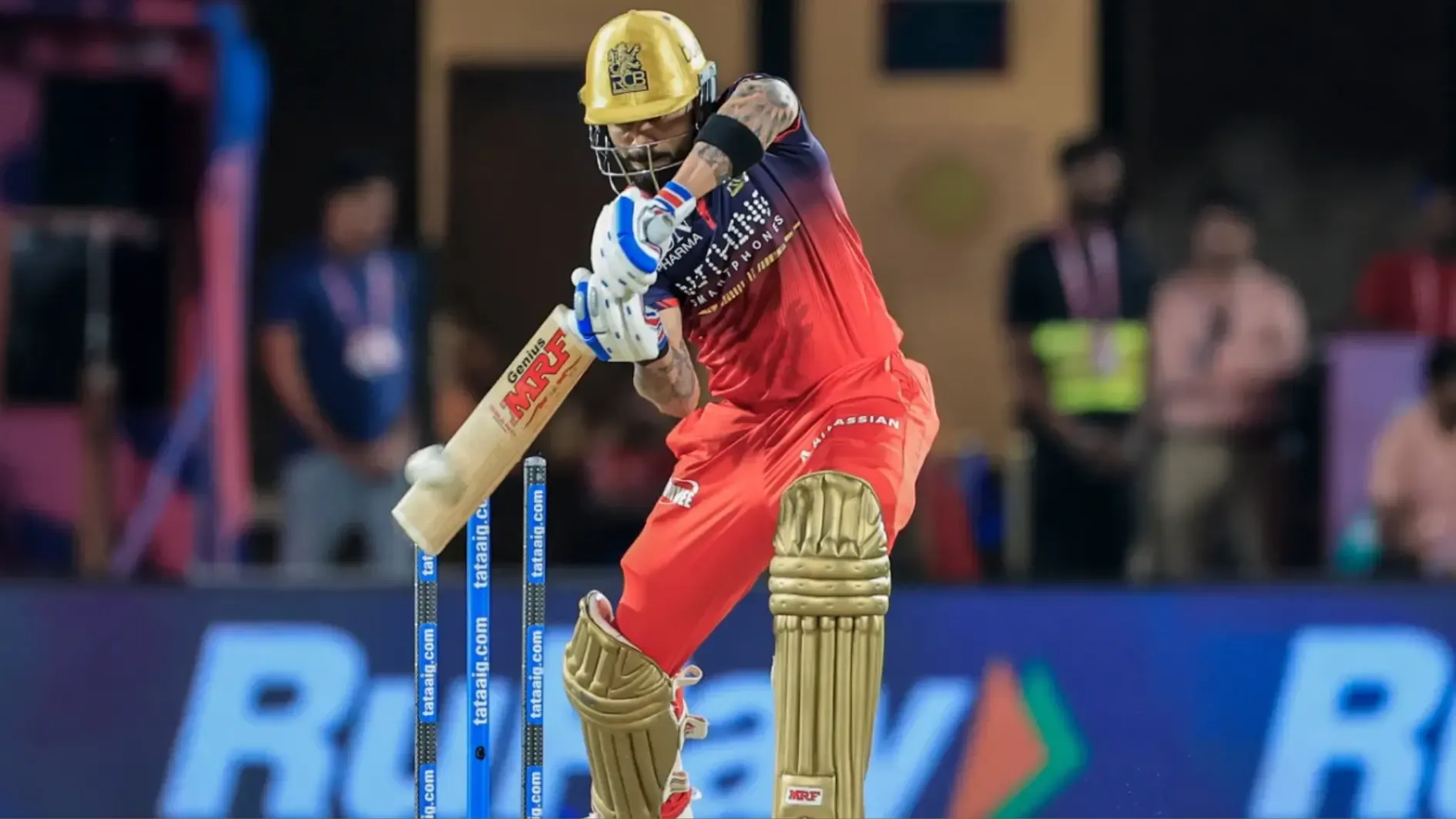
Virat Kohli's high-pressure dismissals reveal a tactical blueprint used by opposing captains to exploit his micro-movements and aggressive instincts. When pressure spikes in knockouts, teams consistently leverage his psychological drive to anchor or accelerate against specific ball trajectories.
- The physical mechanics and technical breakdowns of these specific big-match dismissals outline a distinct pattern:
- 2016 IPL Final (RCB vs SRH):
- 2017 Champions Trophy Final (India vs Pakistan):
- 2021 World Test Championship Final (India vs New Zealand):
- 2023 World Cup Final (India vs Australia):
- 2024 Men’s T20 World Cup Semi-Final (India vs England):
- 2026 IPL Qualifier 1 (RCB vs GT):
The physical mechanics and technical breakdowns of these specific big-match dismissals outline a distinct pattern:
2016 IPL Final (RCB vs SRH):
Ben Cutting bowled a cross-seam, slightly wider off-cutter that sat on the surface. Having just brought up his 50, Kohli attempted a forceful, flashing drive away from his body through the off-side. He failed to account for the slight dual-bounce of the pitch, dragging an inside-under edge back into his own stumps. Sunrisers Hyderabad recognized that Chris Gayle’s explosive start allowed Kohli to play freely. However, once Gayle departed, Cutting bowled wide of Kohli's eye-line, forcing him to manufacture pace rather than use the bowler's speed.
2017 Champions Trophy Final (India vs Pakistan):
Mohammad Amir bowled a fiery, back-of-a-length delivery angling across the right-hander. On the previous ball, Kohli was dropped at slip chasing a wide outswinger. Immediately on the next ball, under immense pressure chasing Pakistan's massive target, Kohli tried to forcefully close the face of his bat to flick a leading-edge delivery through the leg side. The leading/inside portion of the blade took a thick edge, popping straight to point.
Mohammad Amir has stepped down from international cricket.
He returned figures of 3/16 in the 2017 ICC Champions Trophy final, removing India's top three of Rohit Sharma, Shikhar Dhawan and Virat Kohli 🔥
Un remember moment— Dilkesh (@Dilkesh1807) December 14, 2024
2021 World Test Championship Final (India vs New Zealand):
Tall paceman Kyle Jamieson targeted him relentlessly on a heavy, testing length around the off-stump. Jamieson choked Kohli's scoring, allowing him only one boundary across a grueling 132-ball stay. Trapped by the mounting pressure and his rigid front-foot lock, Kohli pushed forward tentatively with hard hands, playing at a ball he could have left, resulting in a fatal LBW.
Virat Kohli was looking so good yesterday to make a mark on the WTC final, he had over 90% control over his batting, was hitting sweetly. But got out on 44 this morning by a great ball from Kyle Jamieson, a good Innings nevertheless by Virat. pic.twitter.com/zsQaSANqBS
— Mufaddal Vohra (@mufaddal_vohra) June 20, 2021
2023 World Cup Final (India vs Australia):
Pat Cummins bowled an ultra-disciplined short-of-a-length delivery over the wicket, cutting back sharply inward off the seam at roughly 140 kph. The ball lacked pace, gripping a sluggish Narendra Modi Stadium pitch. Kohli sat on his back foot trying to open the face of the bat to steer the ball fine to third man. His hands were too far from his torso, causing the ball to take a thick inside edge and crash into the bails. Australia deliberately starved Kohli of boundary options, choking his natural rhythm. Frustrated by the lack of strike rotation, Kohli attempted a high-friction, low-percentage glide shot close to his body, playing right into Cummins' plan of hitting the “heavy” length.
Another day, Another remainder of the 2023 world cup #ViratKohli #2023WorldCup #RCBvsGT pic.twitter.com/3V87Af9XTC
— Pitch & Paddock 🙂 (@PitchPaddocks) May 26, 2026
2024 Men’s T20 World Cup Semi-Final (India vs England):
Reece Topley bowled a hard length that skidded relatively low on a sluggish pitch. Frustrated by a slow start and wanting to assert dominance early in the powerplay, Kohli danced down the track and tried to swipe a horizontal-bat cross-bat shot through the leg side. He completely misjudged the low bounce, playing well ahead of his body, and was clean-bowled off a tight angle.
2.2 – Six
2.4 – WicketReece Topley gets rid of Virat Kohli early.
📸: Disney + Hotstar#T20WorldCup2024 pic.twitter.com/QKcemV1BEZ
— CricTracker (@Cricketracker) June 27, 2024
2026 IPL Qualifier 1 (RCB vs GT):
Jason Holder extracted variable, two-paced bounce out of a short, probing delivery outside the off-stump line. Chasing a landmark fifty in a high-stakes playoff game, Kohli played an aggressive, early-handed drag pull from outside off-stump. His weight transfer went backward instead of forward over the bounce, chopping the ball directly back onto the woodwork. Gujarat Titans capitalized on a period where Kohli went eleven consecutive balls without a boundary. Knowing his history of trying to breaks shackles forcefully when stagnant, Holder pulled back his length, making Kohli create his own leverage on a tricky, dual-paced surface.
Virat Kohli dismissed for 43 in 25 balls. pic.twitter.com/PwLeVWjcx6
— Mufaddal Vohra (@mufaddal_vohra) May 26, 2026
Teams have built an extensive data book on Kohli's high-pressure triggers. If they can build 10–12 balls of absolute boundary drought, his muscle memory shifts into “force mode.” Instead of letting the ball come to him, he reaches out, creating that dangerous gap between bat and pad that consistently brings his stumps or the slip cordon into play.